

25kg PE Bags for NPG Packaging: From Automatic Bag Feeding to Palletizing
Packaging plays an important role in the handling, storage and transportation of industrial materials such as NPG. For manufacturers handling NPG in large volumes, the packaging bag needs to work not only as a container, but also as an integral part of an efficient and automated packaging process.
This article will give you an overview of the entire automated packing process for NPG using our 25kg PE bags, along with several key points to consider for smooth and efficient operation.
Packing Process
1. Automatic Bag Feeding
The packaging process starts with automatic bag feeding.
A robotic gripper picks up an empty 25kg PE bag and transfers it to the filling position. Because the process is fully automated, the bag needs to be handled accurately and consistently by the packaging equipment.
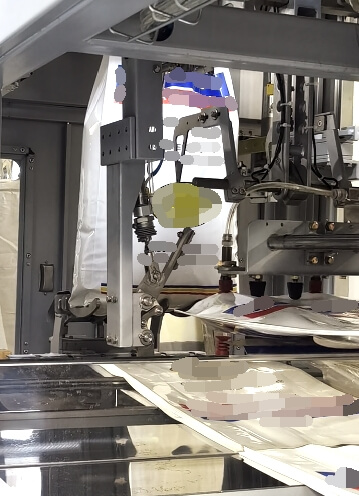
This is where small details in bag construction can make a difference.
Consistent bag dimensions help the robotic gripper pick up and position the bag correctly. At the same time, the structure of the bag mouth needs to provide sufficient stability during handling.
2. Automatic NPG Filling
Once the empty bag has been positioned correctly, the filling system automatically fills the 25kg PE bag with NPG.
During filling, the bag needs to remain securely positioned while accommodating the material entering the package.
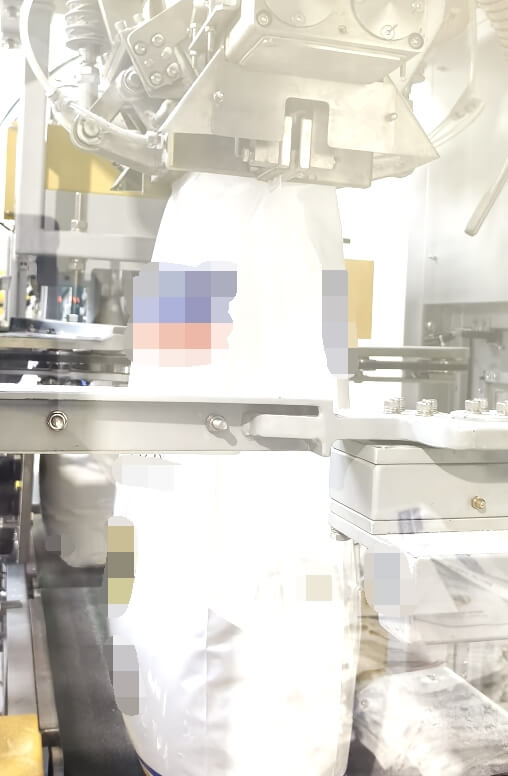
The interaction between the packaging bag, filling equipment and material behavior can all influence the efficiency of the filling process.
For this reason, selecting a suitable industrial PE bag is not simply about choosing a bag with the correct capacity. The bag also needs to be compatible with the customer's filling equipment and the complete packaging process.
3. Sealing After Filling
After the required amount of NPG has been filled, the bag is sealed before being transferred to the palletizing stage.
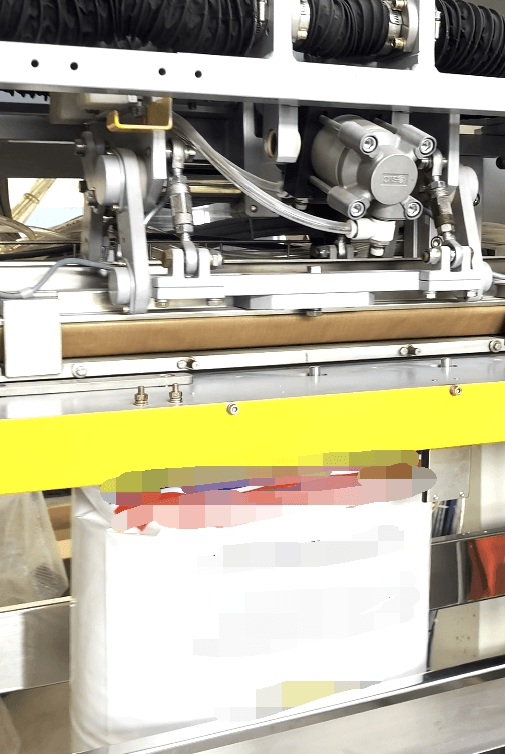
For an automated packaging line, the condition and position of the bag mouth are important. If too much material accumulates around the bag mouth, it can reduce the available sealing area and make the sealing process less efficient.
This is why bag design and equipment settings need to work together.
The spot-glued bag mouth helps maintain a stable and flat opening during automatic handling, allowing the bag to be positioned properly before sealing.
A well-designed bag should not only hold the required amount of material but also cooperate effectively with the equipment throughout the filling and sealing process.
4. Automatic Palletizing
After sealing, the filled 25kg bags are automatically arranged on pallets.
At this point, the bags have completed the filling and sealing stages, but the packaging process is not necessarily finished.
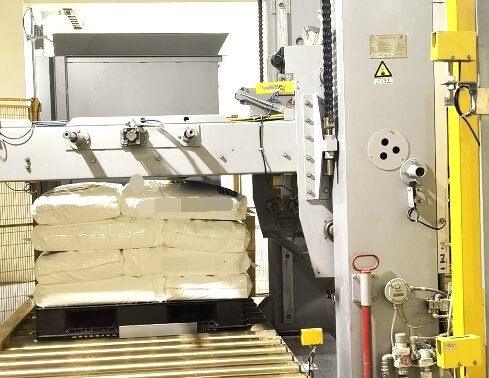
After filling, some air may remain inside the bags. As the packaged material settles and the residual air gradually escapes, the shape and compactness of the palletized bags can change.
This makes the post-palletizing handling process an important consideration for NPG packaging.
5. Resting Before Final Strapping
It is really important to allow the palletized bags to rest before applying the final strapping.
The filled and palletized NPG bags are allowed to rest for approximately 1–2 days. During this period, residual air can gradually escape and the material inside the bags can settle.
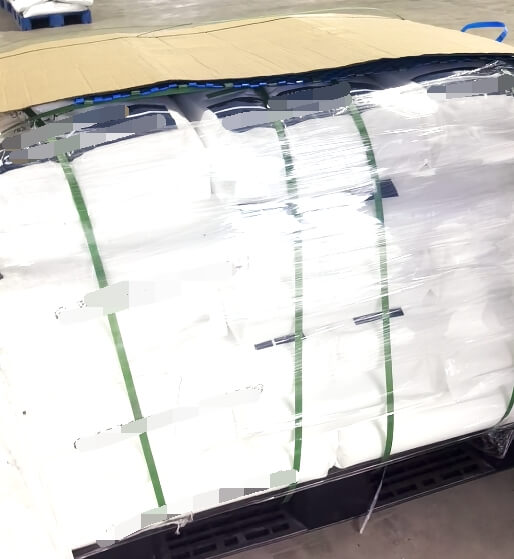
If the pallet is strapped immediately after palletizing, the bags may become less compact as the material settles and air is released. This can cause the straps to become loose and may affect the overall stability of the pallet.
Allowing the pallet to rest before final strapping helps the packaged material reach a more stable condition before the pallet is secured for storage or transportation.
Key Points to Consider
1. Dot Glue for Stable Bag Handling
To improve the stability of the bag mouth during automatic handling, dot glue is applied to both sides of the bag mouth.
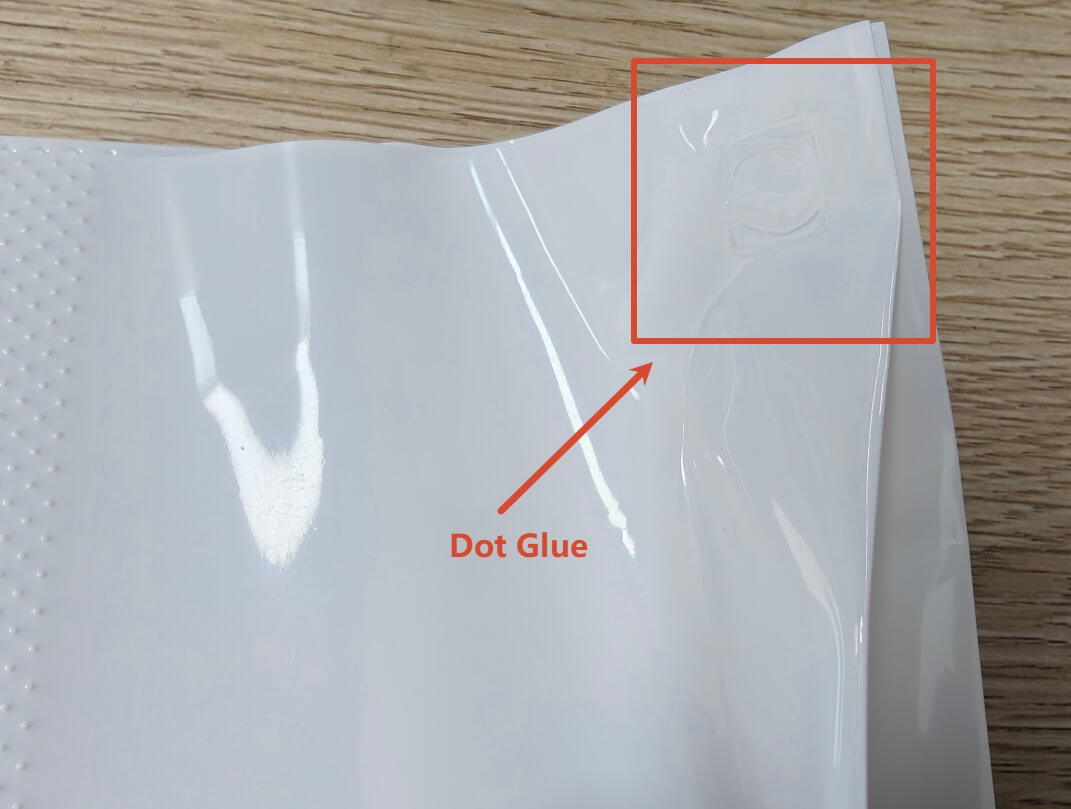
The dot-glued areas help keep the bag mouth flat and properly shaped. When the robotic gripper picks up the empty bag, this helps keep the bag body more stable and allows it to be positioned correctly on the filling line.
This design also helps the bag mouth enter the subsequent sealing process in the correct position, supporting a more consistent sealing operation.
It is a relatively small detail in the bag design, but it can make a meaningful difference when the bags are used on an automated packaging line.
2. Air Venting in NPG Packaging
Air management is another important consideration when packaging industrial materials such as NPG.
During the filling process, air can become trapped within the material and inside the bag. Proper venting provides pathways for air movement and helps facilitate the release of trapped air during filling and subsequent settling after palletizing.
For automated NPG packaging, we provide two venting solutions depending on the material characteristics and filling process:
1. The Micro Perforation on the Bag Body
The Micro Perforation can be directly created on the bag body to provide a pathway for air to escape during filling and settling. The hole size, quantity and distribution can be adjusted according to the specific application.

2. Triangular Vent Valve at the Bottom Corner
A triangular vent valve can be integrated into the bottom corner of the bag. This design provides a dedicated venting pathway while maintaining the overall structure of the bag, helping trapped air move out during the settling process.
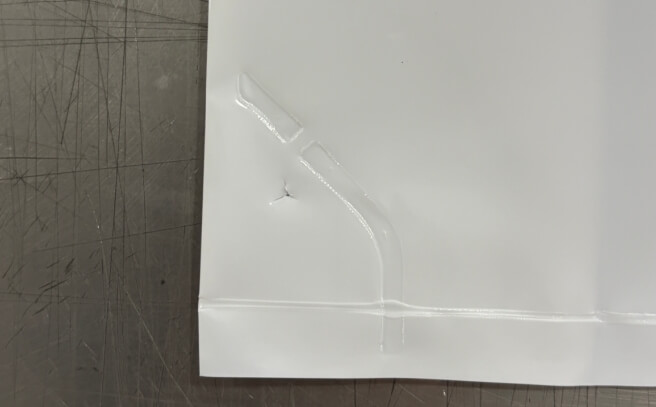
Venting should not be understood as a one-way process in which air can only move outward. Air movement depends on pressure differences and surrounding conditions. Therefore, the venting design, hole configuration, valve structure and overall bag construction should be selected according to the material characteristics and filling process.
With these customized venting options, our 25kg PE bags for automated NPG packaging can better support the filling, air release and settling stages, contributing to more stable and consistent finished packages.
3. Moisture Control Is Also Important
Another observation from the packaging process is the importance of moisture control.
When NPG is exposed to moisture, the material can become lumpy or develop a wet, compact texture. Such changes may affect material handling and can become a quality concern during storage.
For this reason, suitable packaging materials, proper sealing and appropriate storage conditions are important considerations for NPG packaging.
The packaging bag is one part of the overall system. Its material structure and sealing performance should be considered together with the customer's filling, storage and transportation requirements
Looking for 25kg PE Bags for Your Product?
SHU Packaging provide customized PE bags for NPG and other industrial packaging applications.
If you have specific requirements for bag size, thickness, bag-mouth design, venting, printing or compatibility with an automated filling line, contact us to discuss your packaging requirements.


