

NPG Packaging Bag Solution: A Detailed Case Study of 25kg PE Bags
Recently, we provided a packaging bag solution for an NPG manufacturer.
Based on our previous experience working with similar chemical material manufacturers, we recommended using 25kg PE bags for NPG. The main reason is that NPG has certain moisture protection requirements, while PE itself provides good moisture resistance. At the same time, based on the characteristics of NPG filling, we can add air vent holes to the bags to help release the air inside during the filling process.
However, this project was a little different from a regular 25kg packaging bag. The customer uses automatic filling and packaging equipment, so we needed to consider more than just whether the bag could hold NPG. We also needed to make sure the bag could work smoothly with the customer's entire automated packaging process. Based on their equipment and production requirements, we made several special designs.
1. Dot Seals on Both Sides of the Bag Opening for Automatic Bag Loading
The first detail is the bag opening. We added dot seals on both sides of the bag opening.
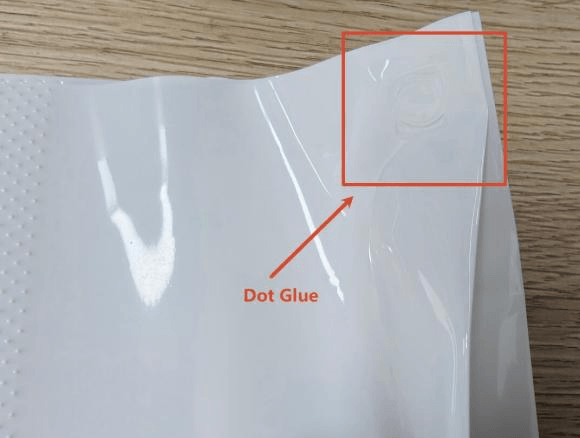
This small design mainly serves two purposes. First, it makes it easier for the robotic arm to pick up the bag. The automatic equipment needs to pick up the empty bag and move it to the filling position. If the bag opening is too loose, the bag may not stay in a stable position during the picking process. With the spot seals, both sides of the bag opening can maintain a more fixed shape, making the bag easier for the robotic arm to grab.
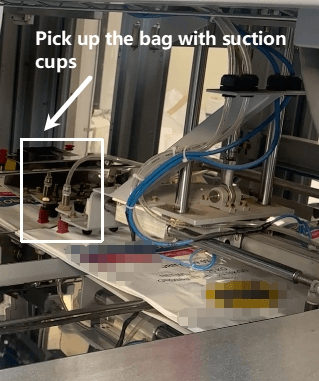
Second, the spot seals also help with the automatic sealing process. After the NPG is filled, the equipment needs to seal the bag automatically. With manual sealing, a worker can simply straighten the bag opening by hand before sealing. But an automatic machine cannot adjust the bag in the same way, so the bag opening itself needs to remain relatively flat and stable. The dot seals help keep the folded edges in position, making the following sealing process smoother.
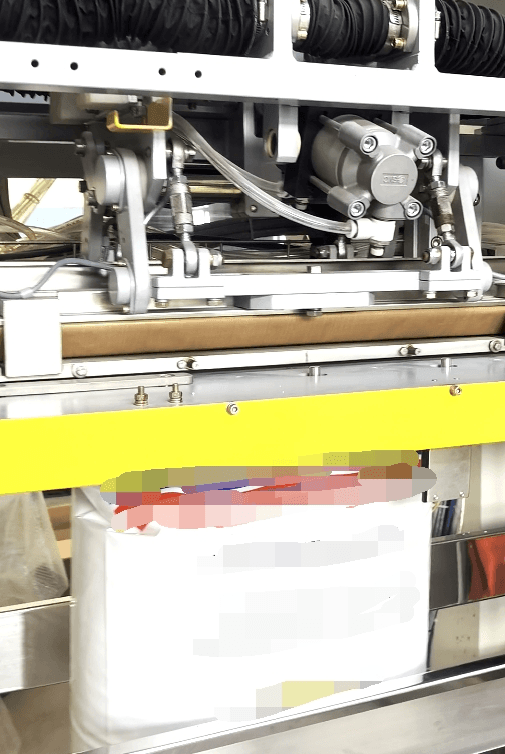
So, although the dot seal is only a small detail on the bag, it can be quite important when the bag is used with an automated packaging system.
2. Micro Perforations to Help Release Air During NPG Filling
The second important design is the micro perforation.
When NPG is filled into the bag through automatic equipment, the material gradually builds up from the bottom of the bag. At the same time, the air already inside the bag also needs to escape. If the air cannot be released properly, it may affect the filling process and the way the NPG settles inside the bag. Therefore, we add suitable micro perforations to the PE bag according to the customer's product and filling equipment.
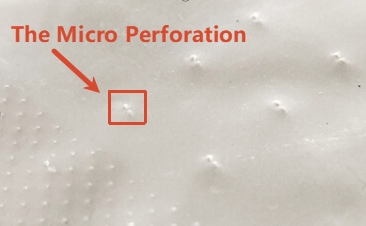
In addition to the micro perforations on the bag body, we also made a triangular corner seal at the bottom of the bag, with an air vent hole in the sealed area.
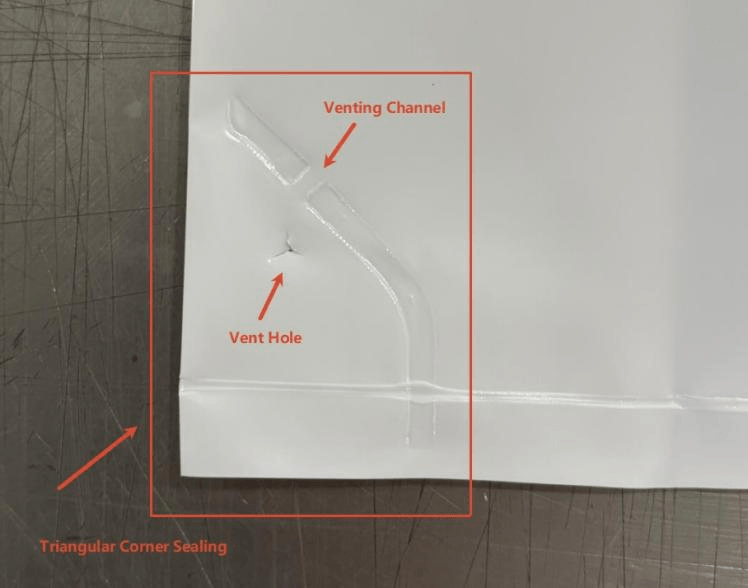
This design creates a passage for the air trapped in the bottom corner of the bag to escape through the air vent hole. It helps reduce air accumulation in the corners, which can otherwise cause the bag to bulge and increase the risk of bag breakage or bursting later.
The triangular corner seal has another function as well. It can reduce the amount of material that gets trapped in the bottom corners of the bag, making it easier to discharge the NPG and helping to empty the bag more completely.
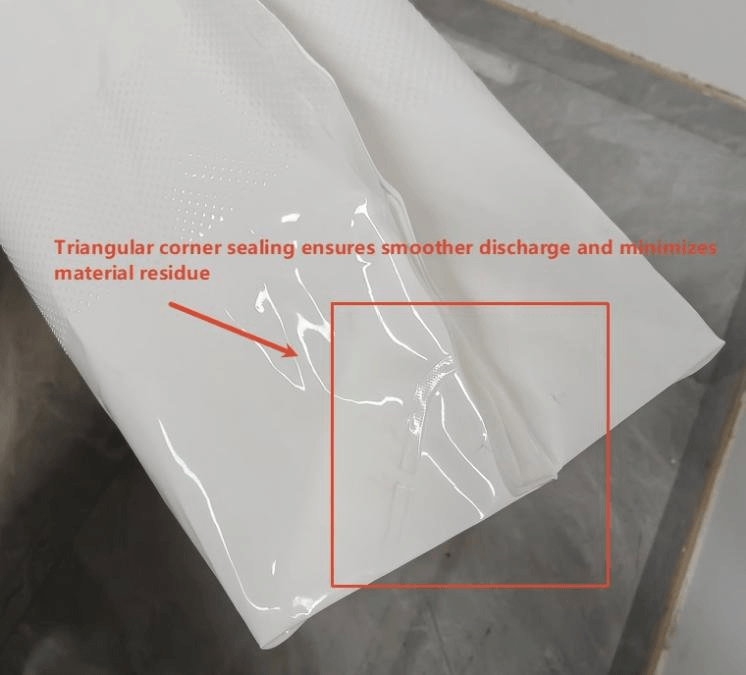
So, this design solves two problems at the same time: it helps release trapped air and reduce bulging at the bottom of the bag, while also making it easier to empty the material and reduce product residue in the corners.
Of course, micro perforations are not simply a case of "the more, the better." The number and position of the micro perforations, as well as the design of the air vent passage in the corner seal, need to be determined according to the product characteristics and filling equipment.
3. Embossing on the Bag Surface to Prevent Bags from Sliding on the Pallet
After the NPG is filled and the bag is sealed, the next step is automatic palletizing. At this stage, we also need to consider another question: Will the bags slide after they are placed on the pallet?
If there is not enough friction between the bags, they may move on the pallet during storage, handling, or long-distance sea transportation. In serious cases, the bags could even slide off the pallet and cause bag breakage.
Therefore, we added embossing to the surface of the bags to increase friction and make the palletized bags more stable.
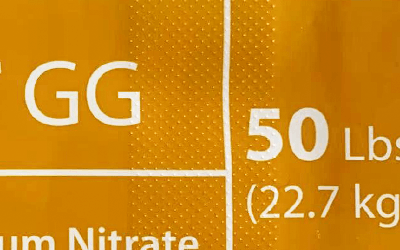
However, embossing is not simply a case of making the pattern as deep as possible. If it is too shallow, the anti-slip effect may not be obvious. If it is too deep, it may affect the automatic bag loading process.
This is especially important when the customer uses suction cups to pick up the bags. If the embossing in the suction area is too deep, the suction cups may not be able to make good contact with the bag surface, which can make it difficult for the robotic arm to pick up the bag.
Therefore, we can adjust the position and depth of the embossing according to the customer's equipment. This is one of the details we pay close attention to when developing bags for automated packaging systems.
4. NPG Needs More Time to Release Air After Filling
After communicating with the customer, we also learned an interesting practical experience.
After the NPG is filled, sealed, and palletized, it does not mean that all the air inside the bags has been released immediately. The customer told us that freshly palletized bags are usually packed quite tightly, but after being left for one day, the bags continue to release air and the pallet can gradually become looser.
Based on the customer's actual production experience, we recommend that after filling and palletizing, the pallets can be left to rest for 1–2 days before final packaging.
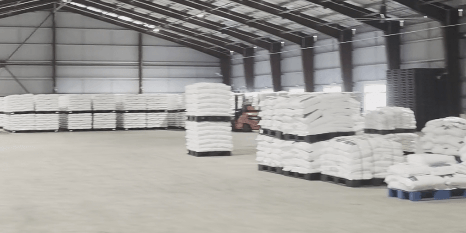
This gives the NPG more time to continue releasing air and settling inside the bags. Of course, the actual resting time should be adjusted according to the customer's NPG product and production conditions.
5. Stretch Film Around the Pallet for Long-Distance Sea Transportation
After the pallets have finished resting, the customer also wraps stretch film around the outside of the pallet.
Since the NPG needs to be transported by sea over a long distance, this additional layer of stretch film provides further protection for the entire pallet. It can help reduce the impact of external moisture during transportation, protect the bags, keep the pallet stable, and reduce the risk of bags moving during loading, unloading, and transportation.
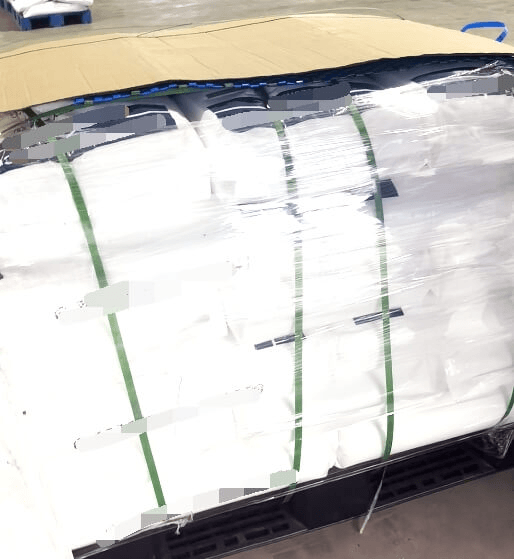
In this way, the packaging process forms a complete system from the individual bag to the final pallet:
PE bag for moisture protection → Air vent holes for air release → Automatic palletizing → Resting for further air release → Stretch film protection → Sea transportation
6. Carton + Pallet Packaging for the Bags
There was another special point about this project.
Because the customer uses automatic bag loading equipment, the bags need to remain as flat as possible during transportation and storage.
For regular bags, we sometimes use woven bag bundles for packaging. This method can help keep the packaging cost lower. However, for automatic bag loading, if the bags are compressed too much or become seriously deformed during bundling, it may affect the robotic arm when it picks up the bags later.
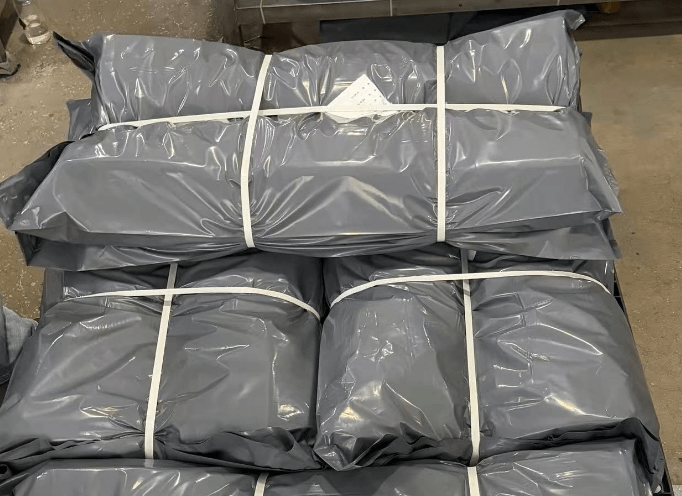
Therefore, for this project, we used cartons + pallets.
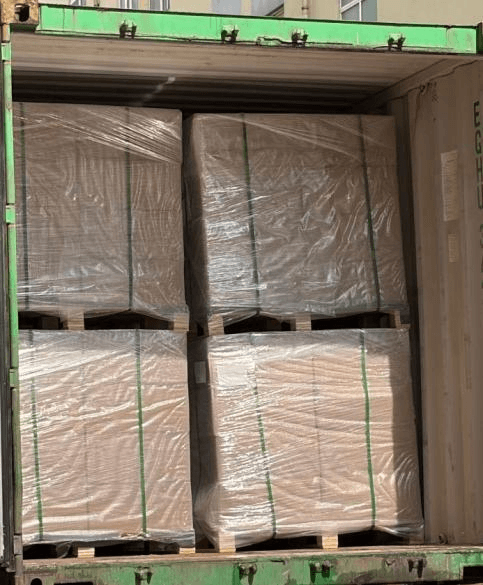
Carton packaging costs more than regular bundled packaging, but it helps keep the bags in a relatively flat condition. This makes it easier for the robotic arm to pick up the bags when the customer uses the automatic bag loading equipment.
So, for customers using automatic packaging equipment, the packaging method for the empty bags themselves also needs to be considered as part of the overall production process.
7. How Did We Handle a Large Quantity of Bags Needed Within a Short Time?
Besides the bag design itself, this project was also a challenge for our production and delivery capabilities.
The customer had just established their factory and had not prepared enough packaging bags in advance, but their production line was already ready to start running. This meant they needed a large quantity of bags within a very short period of time.
For a newly established factory, packaging bags cannot be prepared slowly after the production line starts. If the bags are not delivered on time, even if all the other equipment is ready, production still cannot run normally.
So, after receiving the order, we immediately rearranged our production schedule according to the customer's required delivery time.
Our factory covers approximately 20,000 square meters and currently has 12 bag-making production lines. This production capacity allows us to flexibly allocate different production lines according to order quantities and delivery schedules, instead of relying on a single machine for large-volume orders.
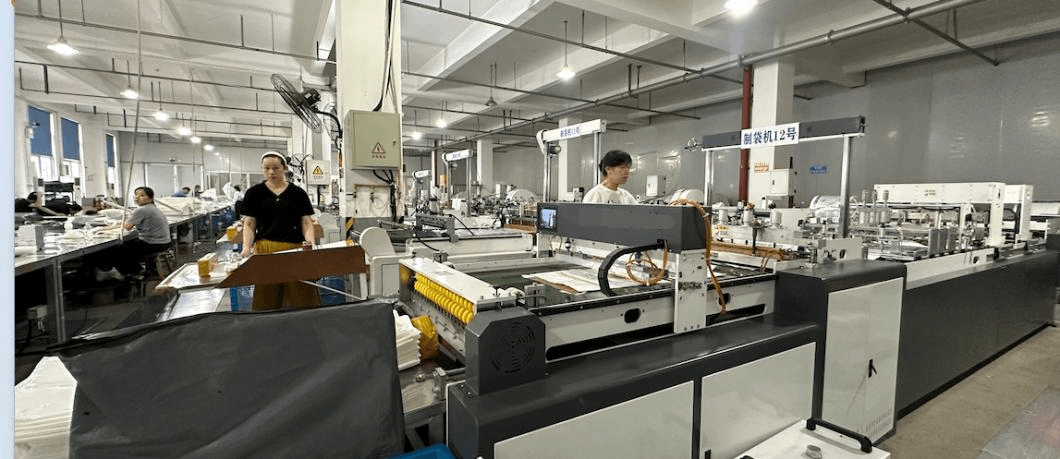
For this urgent order of 80,000 bags, we temporarily arranged 8 bag-making machines to run at the same time to shorten the overall production time as much as possible.
For transportation, we also did not use only one shipping method. Instead, we arranged air freight + sea freight according to the customer's actual needs. The bags that the customer urgently needed to start production were shipped by air first, while the remaining large quantity was shipped by sea.
The purpose was actually very simple: let the customer have enough bags to start production first, while ensuring the subsequent large-volume supply.
8. We Continue to Monitor Bag Performance After the Order Is Completed
For us, delivery is not the end of the project.
Especially for products like NPG, which have certain packaging performance requirements, it is equally important to maintain stable quality in future orders after the bag structure has been finalized for the first order.
Therefore, during this project, we not only recorded the final bag dimensions and structure confirmed by the customer, but also kept important technical parameters from the production process.
After each batch of products is completed, we carry out the required inspections, such as tensile strength, coefficient of friction, elongation at break, and other relevant performance parameters. These test results are recorded and kept for future reference.
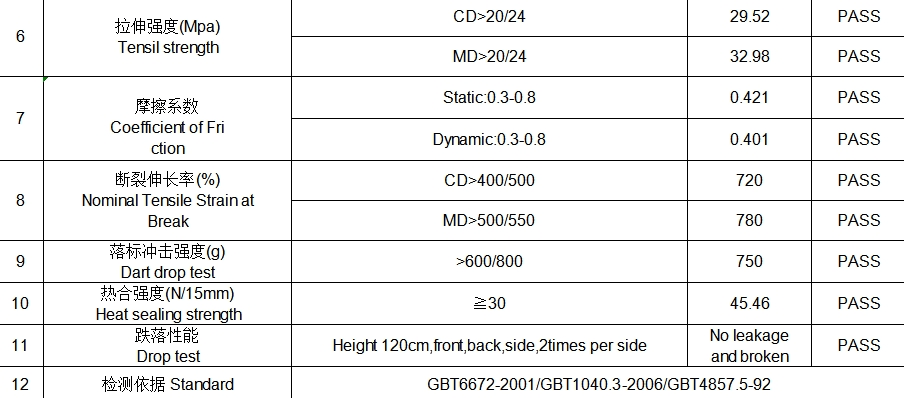
This means that when the customer places another order, we can refer to the previous production data instead of starting the adjustment process from scratch every time.
For example, the customer has already confirmed the air vent requirements, surface embossing, and spot seals on the bag opening for this project. For future production, we can use the previously confirmed parameters as a reference and maintain consistency.
Final Thoughts
All of the details above are actually some of the experience we have gradually gained by visiting the customer's factory and learning about their actual NPG production and packaging process.
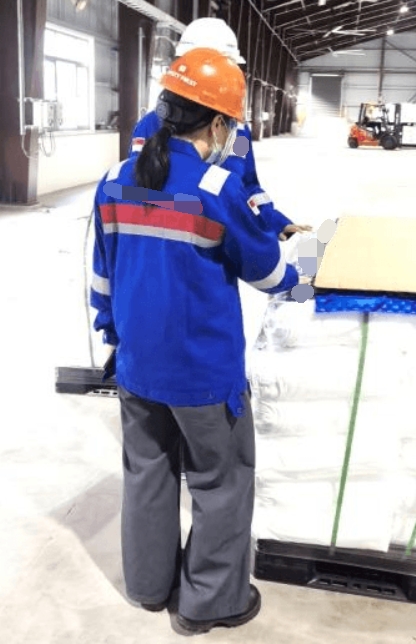
We also wanted to share what we learned from the customer's production site, hoping it can provide some useful reference for companies working with NPG production, packaging, or automated bag loading.
Of course, we are still learning more about NPG ourselves. If you have your own experience with NPG material production, packaging, or automated packaging, or if you have encountered any problems during the process, we are always happy to communicate and exchange ideas.


